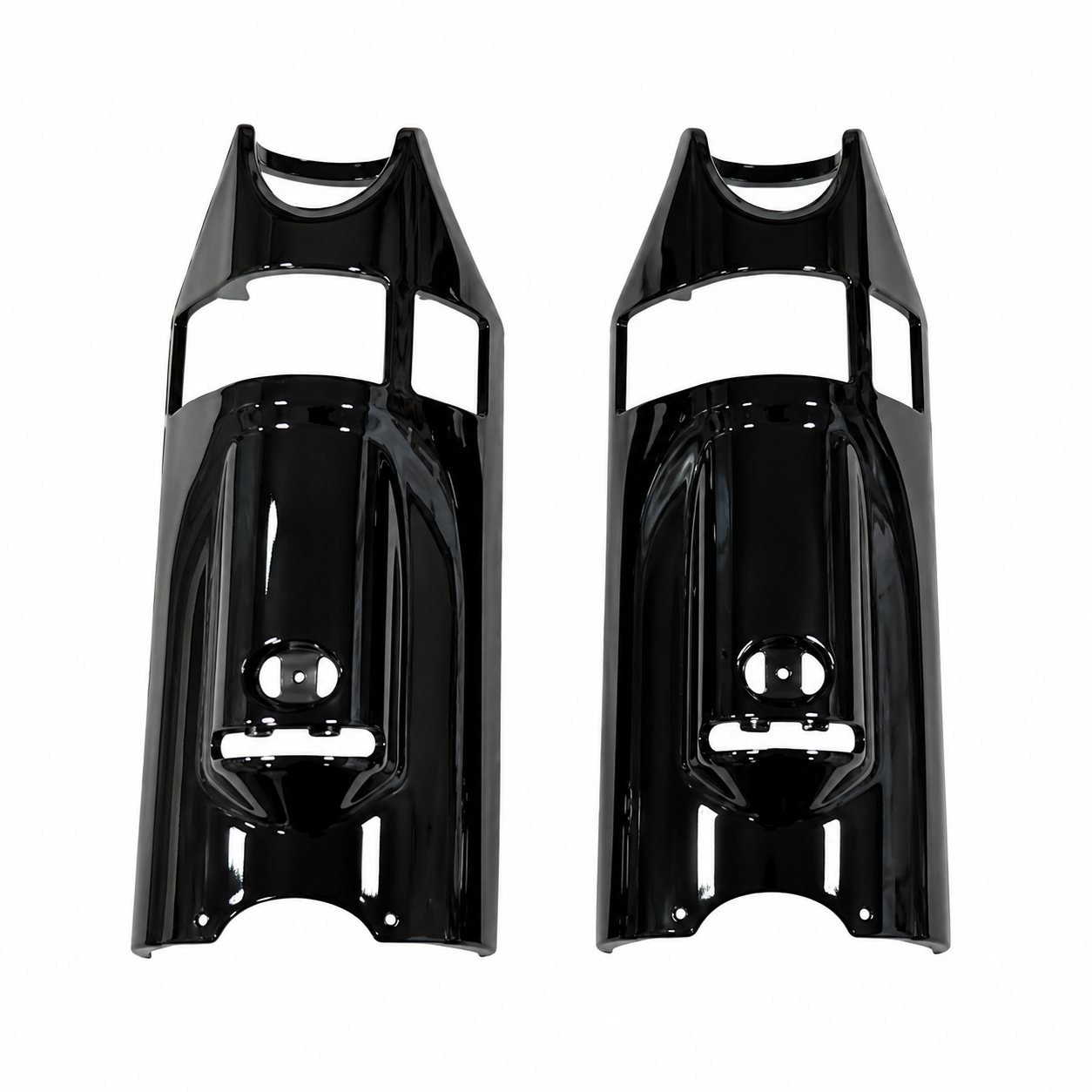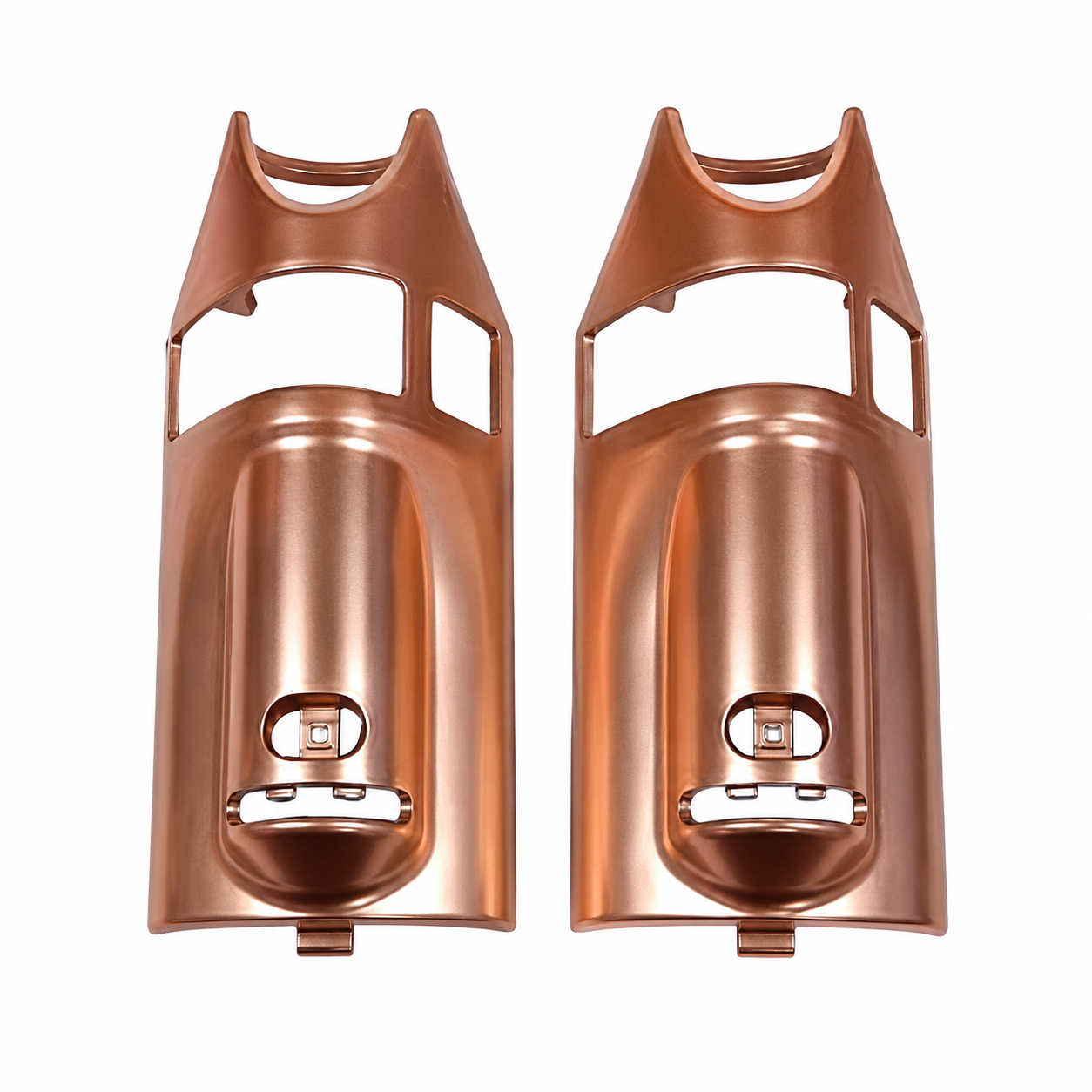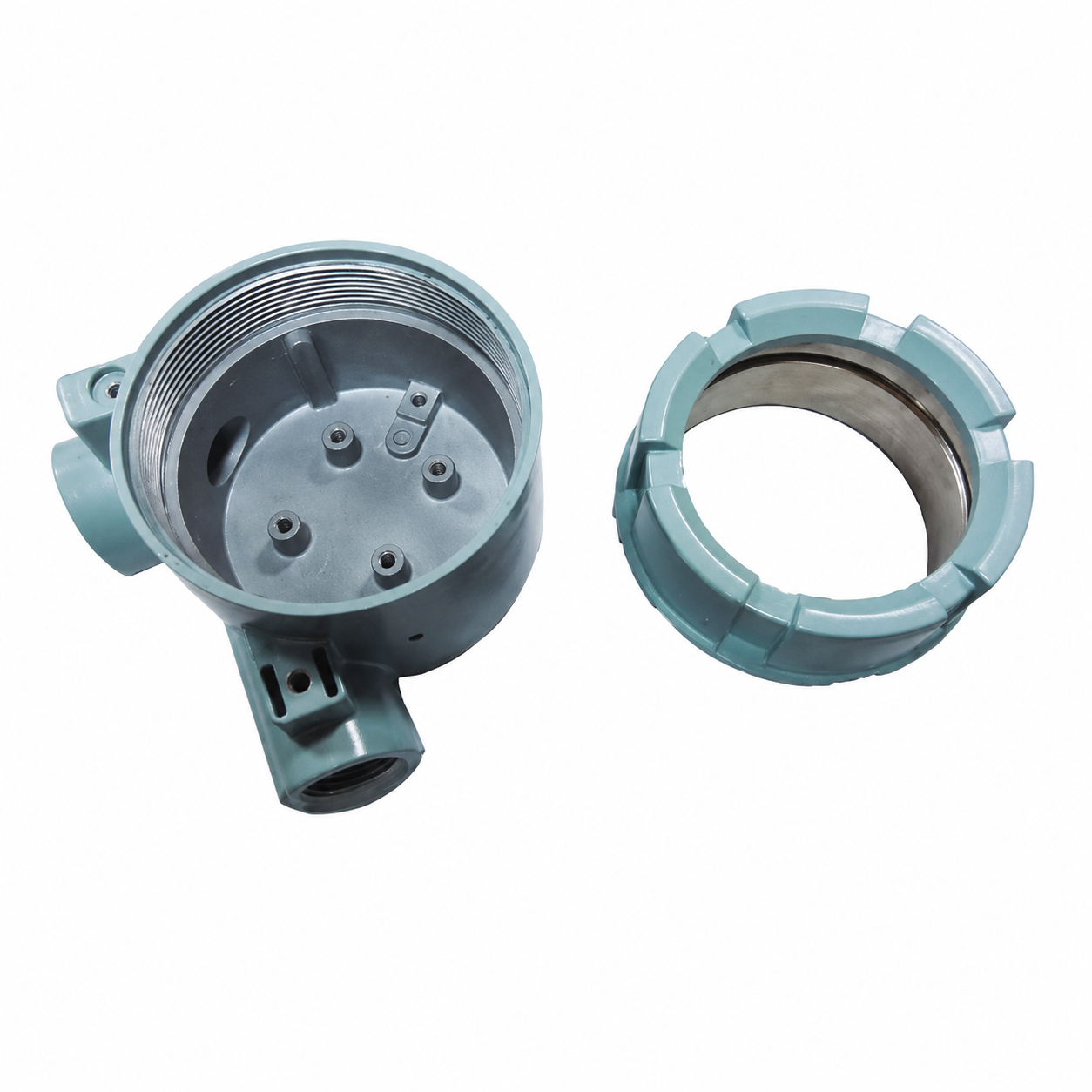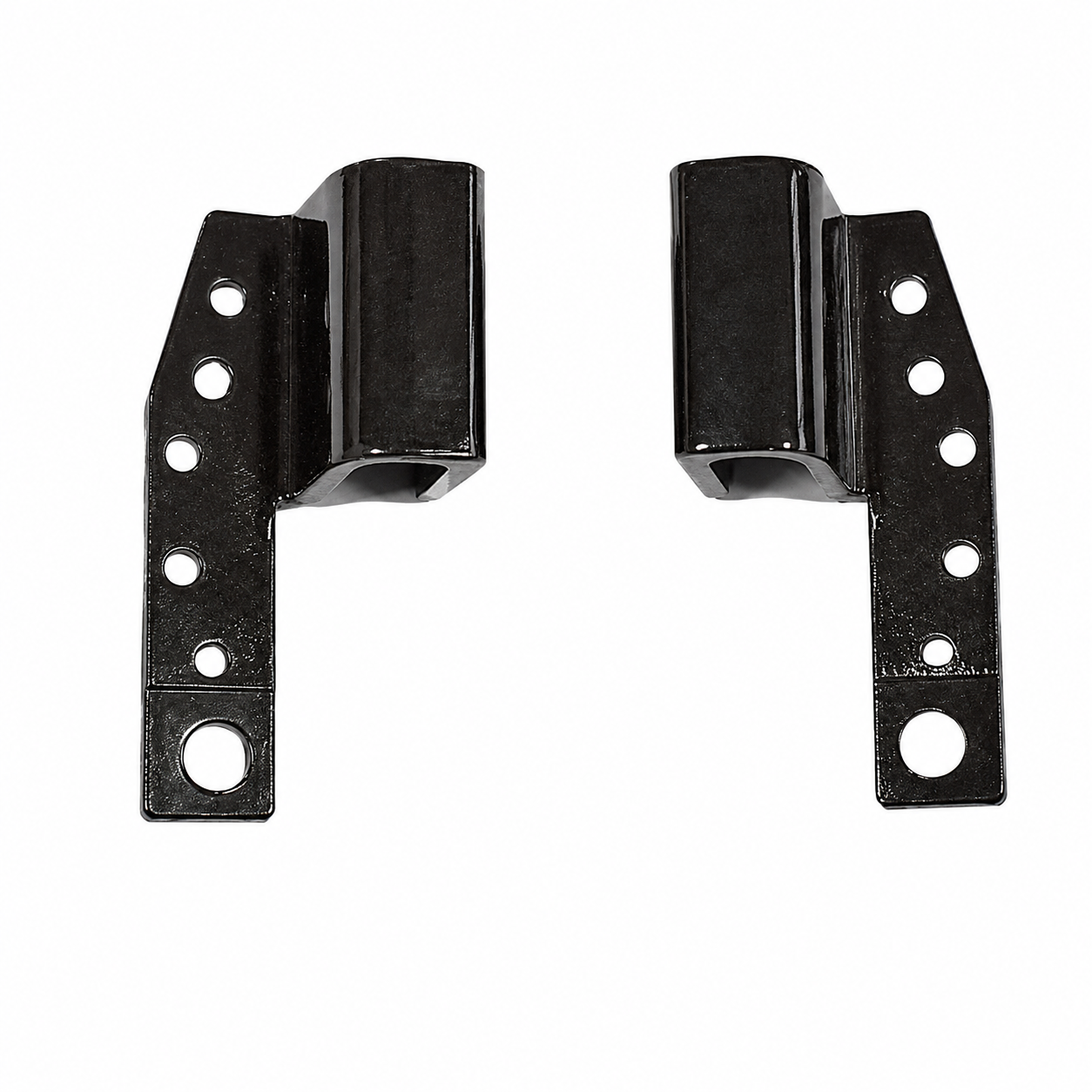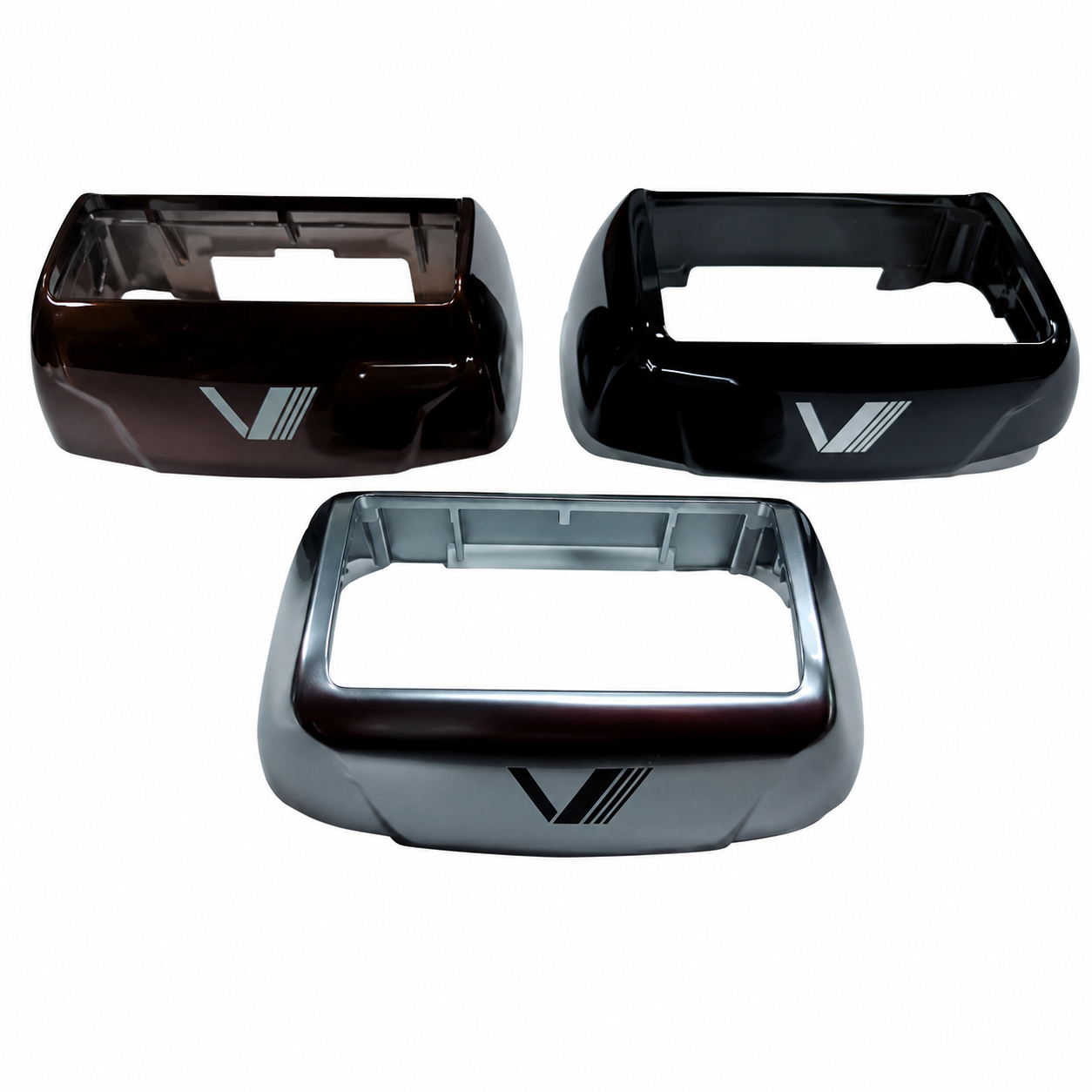
Two die-cast parts can come out of the same die and look like different products, because the finish is doing most of the visual work. Color, gloss, texture and edge definition decide whether a part reads as premium or as a raw casting - and finishing is one of the few places where a custom part can be differentiated without changing the tooling.
This guide covers the finishing routes available for aluminum and zinc alloy die castings, what each one requires from the casting, and how to specify a finish so that the approved sample matches volume production.
1. Finish is a design decision, not a last step
Three requirements flow backwards from the finish into the part design:
- Porosity matters more under plating or anodizing than under paint. Plating and anodizing are thin and reflect the surface beneath; a blister one week after finishing usually started as a gas pocket in the casting. Where a high-gloss plated finish is required, the casting specification has to be tightened.
- Texture has to be in the die. A bead-blast or leather-grain finish is produced by the die surface, which means it must be decided before the die is made - and it requires additional draft angle.
- Visible surfaces determine where marks go. Ejector pin marks, gate remnants and parting lines should be planned onto hidden faces when a cosmetic finish is specified.
2. As-cast and mechanical finishes
- As-cast: the die's own texture, with minimal additional work. Appropriate for internal parts and for products where a technical look is acceptable.
- Vibratory / tumble finishing: deburring and a light uniform matte; inexpensive and effective at removing sharp edges on small parts.
- Sandblasting / bead blasting: a uniform matte surface that hides small casting marks and provides an excellent key for paint or powder coating.
- Brushing: directional lines that give a metal appearance while hiding minor waviness; common on consumer electronics housings.
- Polishing: the highest-reflection mechanical finish, and the most sensitive to casting quality, since every surface imperfection becomes visible.
3. Texture in the die
When the finish must be consistent across thousands of parts, the most reliable route is to put the texture in the die itself - typically achieved by spark erosion (EDM) to a defined texture grade, or by etching.
- A defined texture grade gives a repeatable appearance from the first shot to the last, with no per-part labor.
- Texture depth and draft angle are linked: the deeper the texture, the more draft is needed, so the two must be specified together.
- Texture also masks minor surface waviness, which is one reason textured finishes are common on parts where a perfect mirror finish would be impractical.
4. Aluminum finishing routes
- Anodizing (clear or colored): an oxide layer grown from the aluminum itself, hard-wearing and consistent in color; it is a surface conversion, so casting porosity and alloy composition both affect the result. Hard anodizing gives a thicker, more abrasion-resistant layer for wear surfaces.
- Conversion coating: a chemical layer that improves corrosion resistance and paint adhesion. Where a chrome-free process is required by the destination market, confirm this at the specification stage.
- Powder coating: a thick, durable, opaque finish available in a wide color range, with excellent coverage and good corrosion protection. It hides minor surface variation and is a good option for parts where a perfect casting surface is not economically achievable.
- Liquid painting: thinner than powder, with more freedom on fine detail and a wider range of special effects; requires careful control to keep color consistent.
- Laser etching / marking: logos, part numbers and datamatrix codes applied after finishing, with no tooling and no consumables beyond the marking itself.
5. Zinc alloy finishing routes
- Electroplating (nickel, chrome, gold-tone, bronze-tone): the classic zinc alloy finish, giving a bright metallic appearance at low cost. It is also the finish that most clearly exposes casting quality, since blisters and pinholes appear after plating.
- Passivation and conversion coatings: thinner protective layers, often used as a pre-treatment or as a low-cost corrosion barrier on internal parts.
- Electrophoretic coating (e-coating): uniform coverage of complex geometry including internal recesses, with good corrosion performance; a practical choice when the part has hidden surfaces to protect.
- Powder coating and painting: as for aluminum, and useful where a color match to other parts in the assembly is required.
6. Combining finishes on one part
Where a product needs a premium look, a single part may carry two finishes: polished edges with a textured body, a machined bright face with an anodized surround, or a dyed anodized body with a lasered logo. Three practical points:
- Masking is manual work and adds cost per part; design the split so masking is simple.
- Two finishes in one part almost always mean two quality criteria; specify both.
- Local machining after finishing exposes bare metal, so agree which operation comes last.
7. Appearance criteria worth writing down
"Looking the same as the sample" is not a specification. These points make it testable:
- Finish type and, where applicable, the standard or grade it must meet.
- Color reference, with a tolerance (a physical sample or a color standard, not a description).
- Gloss level, expressed as a range on a defined measuring geometry.
- Surface texture grade if the finish is in the die.
- Coating thickness, where it affects durability or fit.
- Corrosion and abrasion test requirements, with hours or cycles.
- Allowed appearance defects and their limits: pinholes, blisters, flow lines, polish lines, color mottling.
- Which surfaces are cosmetic and which are not - the single most useful line on any finishing drawing.
Finishing checklist
- Choose the finish before the die is cut if it requires a texture or a bigger draft angle.
- Check that the casting specification supports the finish - especially for plating, anodizing and polishing.
- Confirm the finish is compatible with the alloy selected.
- Approve a physical sample in the intended color, gloss and texture.
- Define cosmetic versus non-cosmetic surfaces explicitly.
- Agree the sequence of machining and finishing operations, so nothing exposes bare metal afterwards.
- Specify corrosion and wear tests for the destination market.
- Keep the approved sample under controlled lighting for future comparisons.
Dongguan Jiudian Precision Metal Industry Co., Ltd. produces custom zinc alloy and aluminum alloy die casting parts for consumer electronics, automotive, telecommunications and new energy applications, with in-house die making, machining and surface finishing. Send us your drawing together with the appearance requirement and we will confirm the most suitable finishing route.